Getting into the water is easy. Getting back onto the dock is where the design matters.
For waterfront property owners who swim, paddle, or regularly spend time in the water, the access point can make a noticeable difference in how comfortable the dock is to use. Two common approaches are stairs and ladders, but neither is automatically the better choice.
The right option depends on who uses the dock, available space, water depth, changing water levels, and how the rest of the dock is designed.
What’s the Main Difference?
A dock ladder provides a relatively compact way to move between the dock and water. It typically requires the user to climb more vertically.
Dock stairs provide a more gradual transition, potentially making entry and exit easier for some users, but they generally require more space and a different approach to design.
The choice is therefore about more than appearance.
Think about who needs to get out of the water and how easily they can do it.
When Does a Dock Ladder Make Sense? ⚓
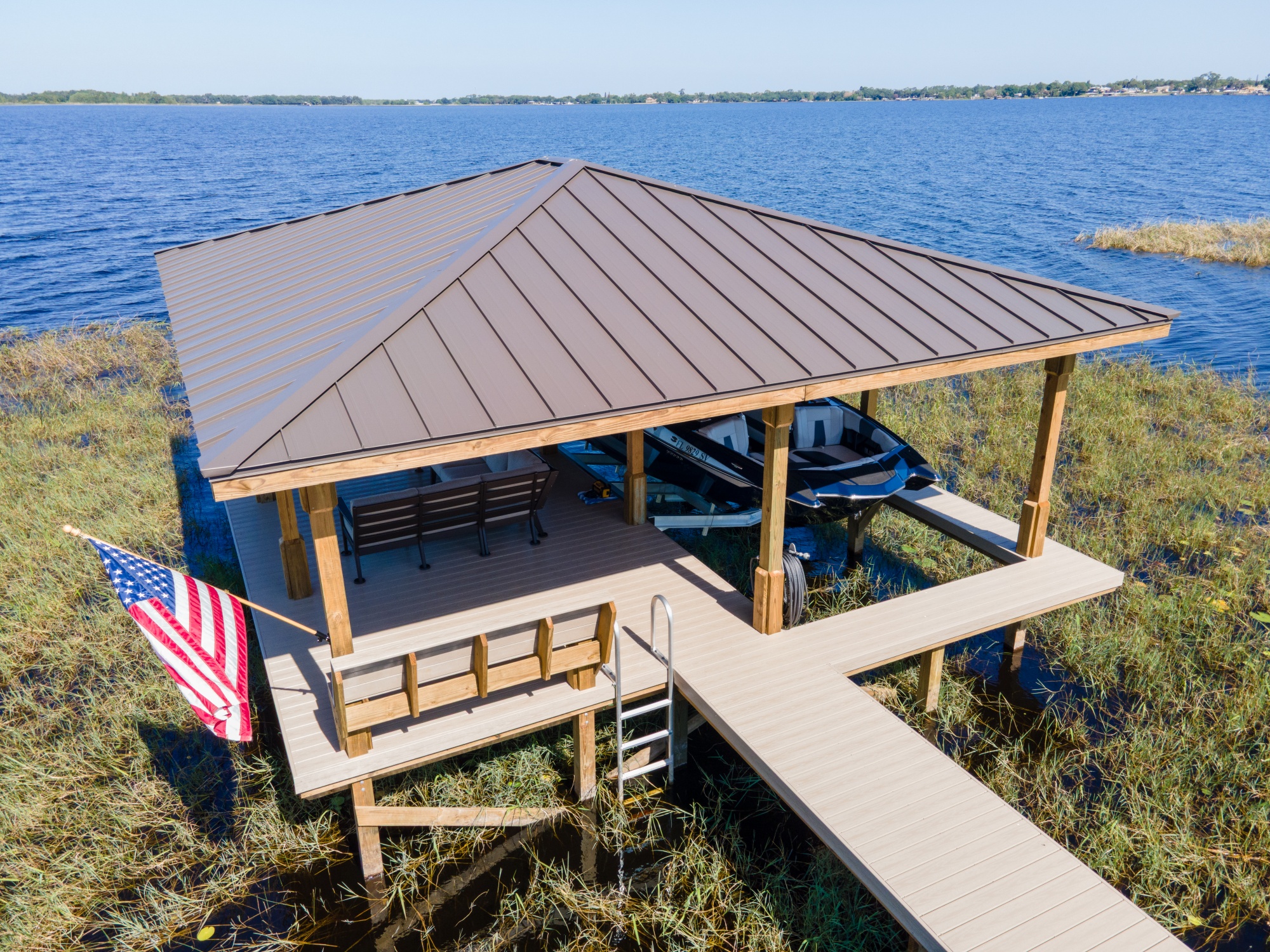
A ladder can be practical when space around the dock is limited or when water access is only one of several uses for the structure.
Potential advantages include:
- Compact footprint
- Keeps more of the dock available for other activities
- Straightforward access for capable swimmers
- Can work well when swimming is occasional rather than the dock’s primary purpose
However, climbing a vertical or steep ladder requires upper-body strength, balance, and coordination.
That may be perfectly comfortable for one household and inconvenient for another.
When Might Dock Stairs Be More Practical?
Stairs can be worth considering when frequent water access is part of how the waterfront will be used.
For example, a property where people regularly swim may benefit from an access point designed around repeated entry and exit rather than treating swimming as an occasional activity.
Stairs may also feel more natural for some users because movement can be less vertical than climbing a ladder.
But stairs need to be planned carefully. The portion extending into the water becomes part of the dock’s overall footprint and must work with the site’s water conditions.
Think About Children and Guests 👨👩👧👦
Don’t design water access only around the strongest swimmer in the household.
If children, older family members, or guests regularly use the waterfront, consider how easily they can return to the dock.
Ask practical questions:
- Is the first reachable step easy to find from the water?
- Is there something secure to hold while climbing?
- Can a tired swimmer get out comfortably?
- Will users be barefoot?
- Does the access point remain practical as water levels change?
These details may seem minor during dock design, but they become much more important once people actually start using the structure.
Water Depth Matters 🌊
The access point needs to make sense for the actual water conditions.
If the water is shallow, stairs or a ladder may interact with the bottom differently than they would in deeper water. Changing water levels can also alter which steps are submerged and how easily users can reach them.
That’s why copying an access setup from another waterfront property isn’t always appropriate.
Two similar-looking docks can have very different conditions underneath them.
Where Should the Water Access Be Located?
Placement can be just as important as choosing between stairs and a ladder.
An access point shouldn’t unnecessarily interfere with:
- Boat movement
- Boarding areas
- Fishing space
- Primary walkways
- Other dock activities
For a dock used for both boating and swimming, separating those activities can create a more functional layout.
Someone climbing out of the water shouldn’t have to compete with people handling a boat whenever the dock layout allows those uses to be organized more effectively.
What About Kayaks and Paddleboards? 🛶
Water access isn’t only about swimming.
If you use kayaks, paddleboards, or similar recreational equipment, think about how you’ll transition between the dock and the water.
The ideal setup for a swimmer may not be the ideal setup for someone trying to stabilize a paddleboard while getting on or off it.
This is another reason to discuss how you use the water before finalizing a custom dock design.
Don’t Add Access as an Afterthought
It’s possible to look at water access as an accessory that can simply be attached after the dock is built.
Planning it from the beginning is usually more useful.
Doing so allows the access point to be considered alongside:
- Dock layout
- Available walking space
- Swimming areas
- Boat access
- Water depth
- Other waterfront features
The result can feel like an intentional part of the dock instead of something squeezed into whatever space remains.
Which Is Better: Dock Stairs or a Ladder?
Neither option wins in every situation.
A ladder may make more sense when you want compact water access and users are comfortable climbing it.
Stairs may deserve consideration when frequent swimming and easier entry and exit are priorities and the property provides suitable space and water conditions.
For some waterfront properties, another configuration may make more sense altogether.
At Hansen Marine Construction, we build custom docks and other waterfront structures throughout Central Florida. Planning around the people who will actually use the dock helps create a waterfront space that works for boating, swimming, fishing, relaxing, and everyday life.
Frequently Asked Questions About Dock Stairs and Ladders
Are dock stairs easier to use than a ladder?
They can be for some people because they may provide a more gradual way to enter and exit the water. Individual mobility, the stair design, and water conditions all matter.
Which takes up less space, dock stairs or a ladder?
A ladder generally has a smaller footprint, which can be useful when available dock space is limited.
Can I add a ladder to an existing dock?
Potentially. The dock’s condition, configuration, attachment location, water depth, and intended use should be considered before installation.
Where should a swimming ladder be placed on a dock?
Ideally, it should provide convenient water access without creating unnecessary conflicts with boats, fishing areas, or primary walking routes.
Should water depth affect my choice?
Yes. Water depth and changes in water level can influence how usable an access system is and should be considered during planning.
Should I plan swimming access when designing a new dock?
If swimming will be part of how you use the property, absolutely. Incorporating water access into the initial layout can produce a more functional dock than trying to find space for it later.