Dock width can seem like a minor design detail until you start using the dock every day. A walkway that feels perfectly adequate for one person carrying a fishing rod may feel cramped when family members are passing each other, someone is carrying boating gear, or several people are heading toward the water at once.
There isn’t one ideal dock width for every waterfront property. The right dimensions depend on how the dock will be used, its overall layout, the available waterfront space, and applicable requirements for the property.
For property owners planning a custom dock, thinking about usable space before construction can prevent an otherwise well-built dock from feeling unnecessarily restrictive.
Start With How You Will Actually Use the Dock
Before deciding on dimensions, consider what happens on the dock during a typical day.
Will you primarily use it to:
- Walk to and from a boat?
- Carry coolers and boating equipment?
- Fish from the walkway?
- Spend time with family and guests?
- Move equipment to a boat house?
- Sit near the water?
- Handle lines while docking a boat?
A dock used primarily as a pathway may have different space requirements from one intended to function as an outdoor waterfront living area.
Walkway Space and Gathering Space Aren’t the Same Thing
One useful design distinction is separating circulation areas from activity areas.
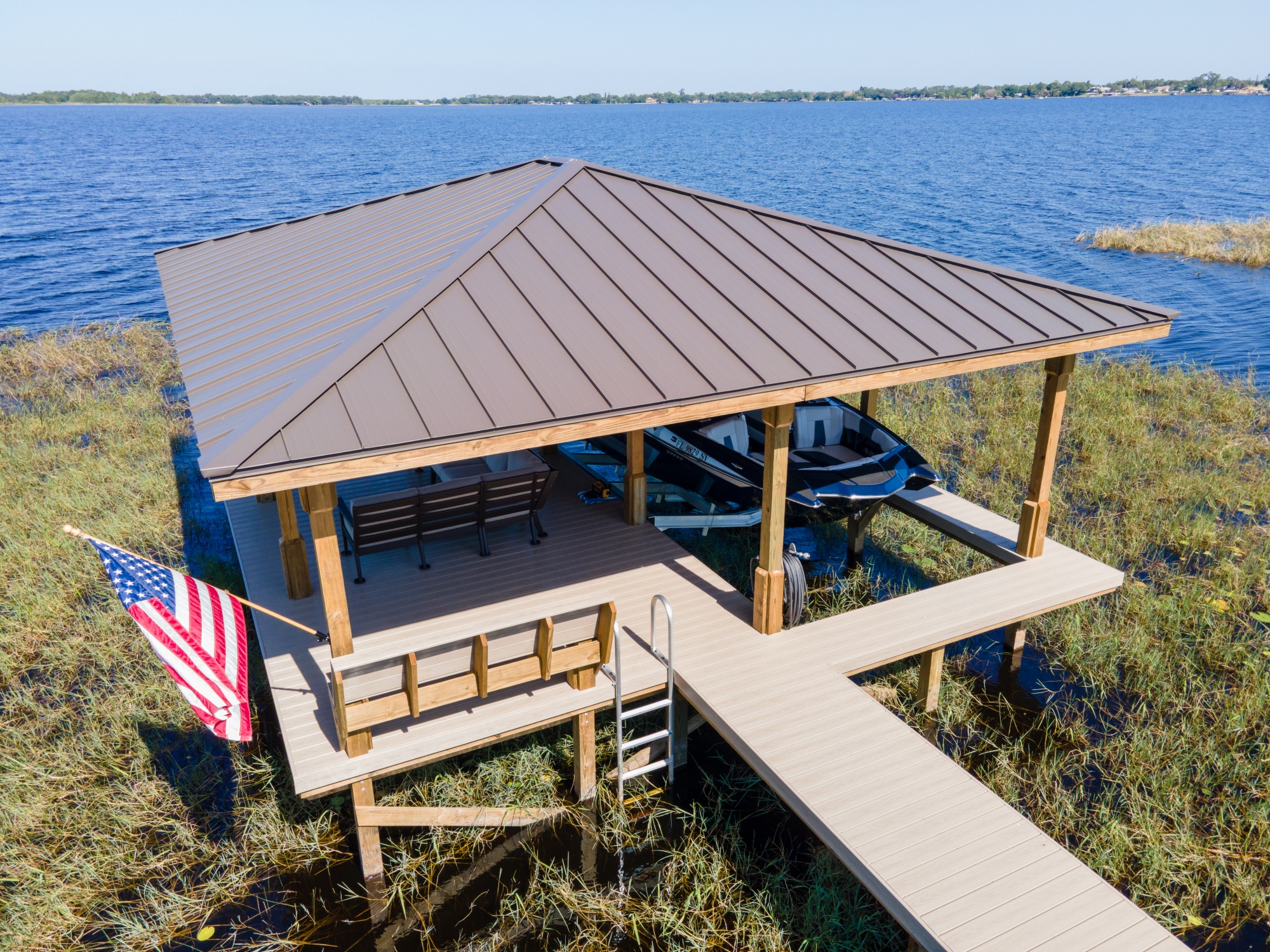
The main walkway needs to allow people to move comfortably between land and the end of the dock. A larger platform can then provide space for activities that would otherwise obstruct that walkway.
For example, a waterfront owner who wants room for chairs and fishing equipment may not need an oversized walkway along the entire dock. A strategically placed platform could potentially provide the desired usable space while maintaining a clear path.
This is where thoughtful custom dock design becomes more valuable than simply making every section larger.
Think About Two-Way Traffic 👥
Imagine two people approaching each other on the dock.
Can they pass comfortably?
Now imagine one of them is carrying a cooler, tackle box, water toys, or boating equipment.
Those everyday situations are easy to overlook when evaluating a dock drawing because an empty walkway can appear much larger on paper than it feels during actual use.
If the dock will regularly accommodate family and guests, circulation deserves particular attention.
Fishing Can Change the Space You Need 🎣
A dock used for fishing requires more than enough room to stand.
Fishing equipment can occupy considerable space, including:
- Rods
- Tackle boxes
- Bait containers
- Coolers
- Chairs
- Landing nets
If people will regularly fish while others walk between the shoreline and boat, the layout should reduce conflicts between those activities.
A dedicated fishing or gathering area can sometimes make more sense than simply increasing the width of the entire structure.
Consider Boat Access Separately 🚤
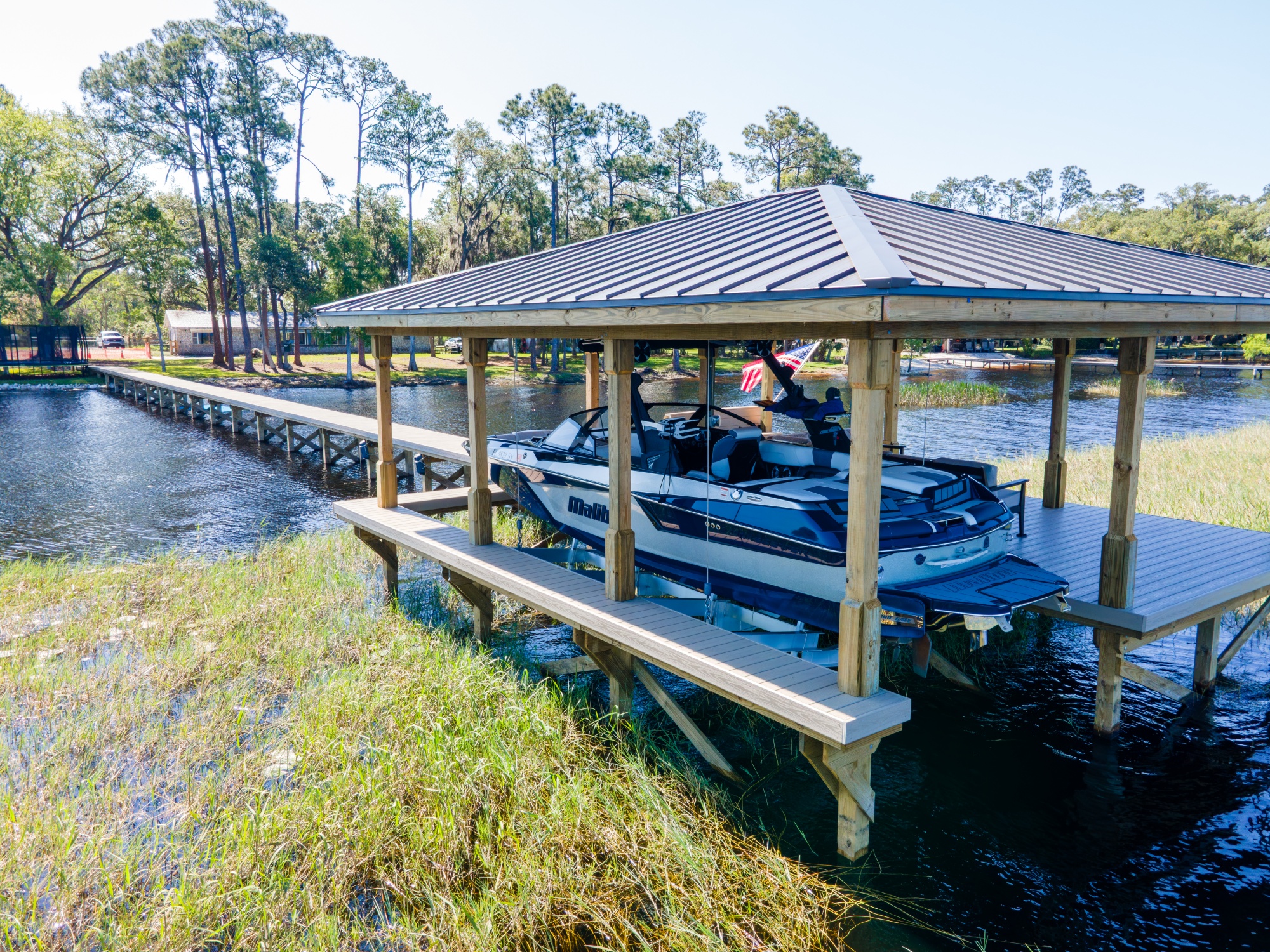
A dock’s purpose isn’t only to provide a walking surface. For many properties, it also needs to create practical access to a boat.
The design should consider where passengers will board, where lines will be handled, and how people will move between the boat and the rest of the dock.
If a boat house or boat lift is part of the waterfront plan, those features should be considered early because they can influence the overall layout and circulation pattern.
Bigger Isn’t Automatically Better
It might seem logical to build the largest dock possible, but additional size should have a purpose.
A larger structure can require more materials and may introduce additional design or permitting considerations. Available waterfront space and applicable rules can also affect what can actually be constructed.
Instead of asking, “How big can we make the dock?”, a more useful question is:
“How much space do we need for the way we’ll use it?”
That approach can produce a dock that feels spacious without including areas that provide little practical benefit.
Don’t Forget the Transition From Land to Water 🌊
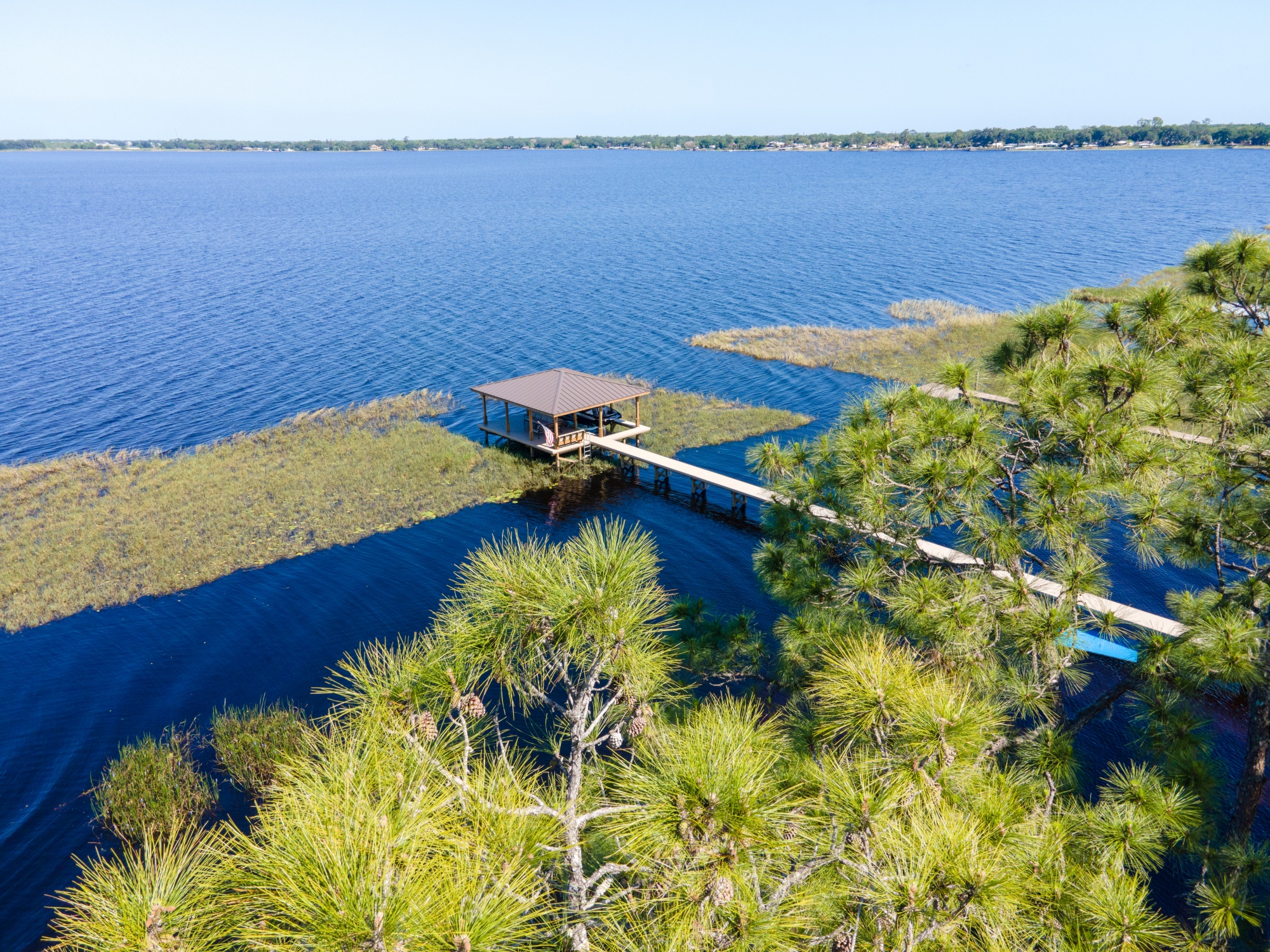
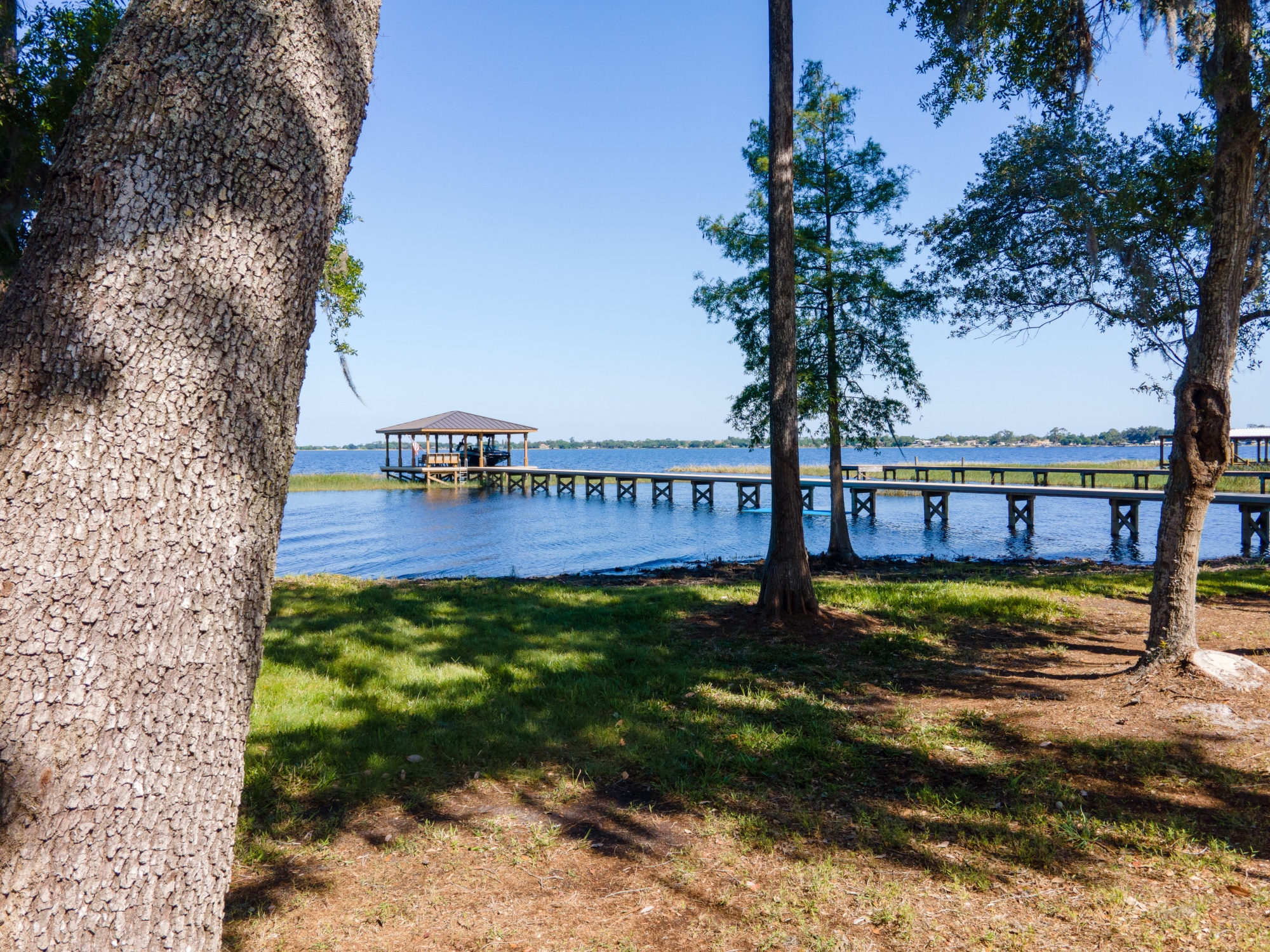
The walkway should also make sense in relation to the property itself.
Consider how people will travel from the home or yard to the dock. An otherwise comfortable dock can still feel awkward if its entrance creates a bottleneck or doesn’t align naturally with the way people approach the waterfront.
Properties with seawalls, elevation changes, or unusual shoreline configurations may require additional planning at this transition.
Accessibility Should Be Discussed During Design
If a household member or frequent visitor has limited mobility, discuss those needs before the dock layout is finalized.
Depending on the project and applicable requirements, considerations can extend beyond walkway width to transitions, changes in elevation, clear pathways, and how people enter and exit boats.
Accessibility needs are much easier to incorporate during planning than to address after construction.
Check Requirements Before Finalizing Dimensions 📋
Dock dimensions can also be affected by local and site-specific requirements.
What is appropriate for one Central Florida waterfront property shouldn’t automatically be assumed appropriate for another. The waterbody, property configuration, proposed structure, and applicable approvals can all influence the final design.
That’s another reason generic online dock plans shouldn’t substitute for evaluating the actual property.
Design Around People, Not Just Measurements
A successful custom dock isn’t defined by one perfect width.
It should provide enough space where space is actually needed while creating a logical connection between the property, waterfront, and activities taking place on the dock.
At Hansen Marine Construction, we build custom docks and other marine construction projects throughout Central Florida. By considering boating, fishing, entertaining, access, and the physical waterfront together, the dock can be planned around how the property owner intends to use it rather than relying on a one-size-fits-all layout.
Frequently Asked Questions About Dock Width and Usable Space
What is the best width for a residential dock?
There isn’t one width that works for every residential dock. Intended use, layout, property conditions, and applicable requirements should determine the final dimensions.
Should a fishing dock be wider?
It may benefit from additional usable space because fishing equipment and people can obstruct a narrow circulation path. Another option is incorporating a dedicated fishing platform into the layout.
Is a wider dock always more comfortable?
More space can improve comfort, but making every section wider isn’t necessarily the most efficient design. Providing additional space at locations where people gather may be more useful.
Should I plan dock furniture before the dock is built?
Yes. If you expect to use chairs, tables, or other furnishings, accounting for them during design helps ensure they don’t block the primary walkway.
Can I make my dock as wide as I want?
Not necessarily. Property conditions and applicable permitting or construction requirements can affect the dimensions and configuration that are possible.
Why choose a custom dock instead of a standard layout?
A custom dock can account for the property’s shoreline, water access, boating needs, fishing, entertaining, and circulation rather than assuming every waterfront owner uses a dock the same way.